The Learning Curve: October 2026 Newsletter
What it takes for a public system to sustain what works, and how funders can tell. Reflections from UNGA week in New York.
What Would Convince You a System Had Changed?
Systems change has become one of the most confident claims in education and international development. Funders ask for it, governments announce it, and organizations use the term to signal that a successful program has become larger and more permanent. The instinct is sound: a single intervention, however well evidenced, rarely transforms an education system on its own. Furthermore, no one has settled what counts as evidence that a system has changed.
The Learning Curve: September 2026 Newsletter
Join us for a deep dive into Measuring Systems Change: cutting through the industry noise to ask what actually counts as evidence that an education system has transformed and how we ensure those gains survive over time.
Preparing Tanzania’s Young People for Life and Work
Tanzania has expanded access and built much of the reform architecture. The next opportunity is to ensure lower secondary prepares young people for what comes next.
The Hidden Architecture of Education Ministries
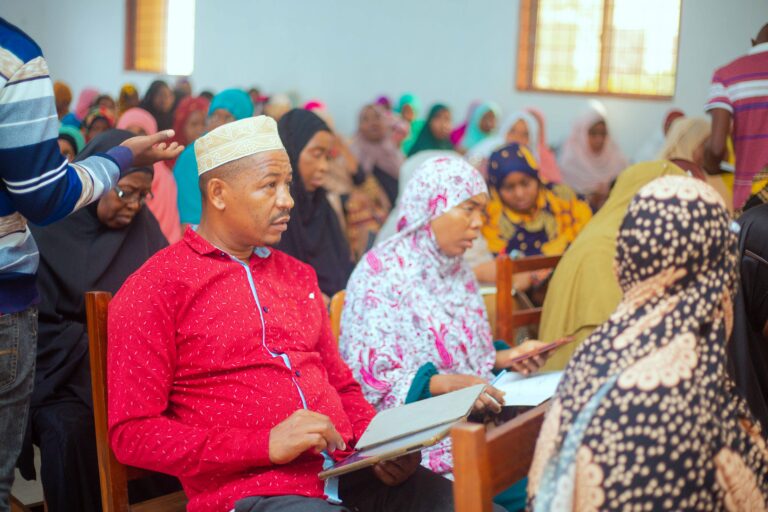
As governments become increasingly central to education reform across Africa, understanding how education ministries actually make decisions is critical to achieving sustainable scale. Drawing on a case study from Zanzibar featured in the Stanford Social Innovation Review, this session explores the incentives, constraints, and decision-making processes that shape government adoption of teacher training, innovation, and system reform.
The Learning Curve: September 2025 UNGA Newsletter
Dive into our special edition UNGA 2025 newsletter for key insights into funding shifts, government priorities, and what’s next for education in Africa.
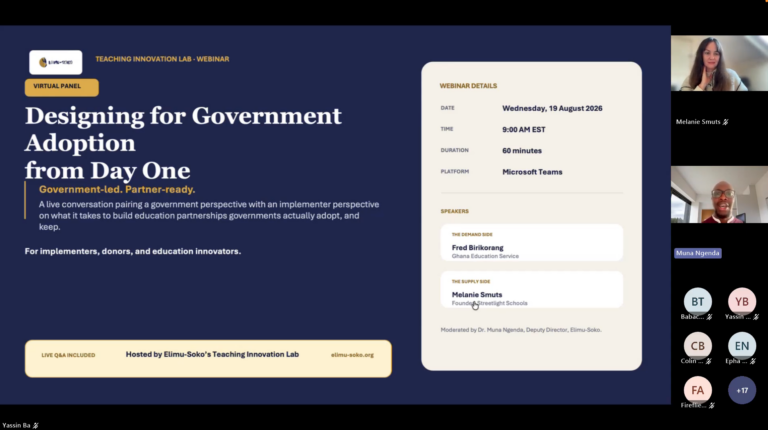
Designing for Government Adoption from Day One
A live panel pairing a government perspective with an implementer perspective on what it takes to build education partnerships governments actually adopt, and keep. Hosted by the Teaching Innovation Lab.
A Blueprint for Scaling Education Innovations With Government
Why the key to sustainable education reform isn’t more funding, it’s integration
As international aid declines, education innovations need to be embedded in government systems from the outset rather than kept as donor-funded pilots. Drawing on Elimu-Soko’s work in Zanzibar, where a teacher training pilot lifted literacy proficiency from 6% to 34%, there are three pillars for lasting reform: government-led decision-making, systemic integration into existing structures, and zero additional cost to government budgets.
Teaching Innovation Lab: Innovation Agenda
A working framework that sets the priorities, evidence base, and design principles guiding the Teaching Innovation Lab.
Blog: Unlocking Government Resources to Scale-Up Innovations
How can we scale what works in public education without relying on aid?
The Learning Curve: June 2025 Newsletter
Catch up on our latest milestones, partnerships, and lessons we’re learning in this edition of the Elimu-Soko newsletter.
Technology, Content, and Pedagogy to Amplify Drivers of Equitable, Inclusive, and Resilient Learning
Global Partnership for Education (GPE)
Elimu-Soko: Pioneering Government-Led Educational Innovation in Rwanda
Association for the Development of Education in Africa (ADEA)